Wild Flowers Line-art Clipart: Free Graphics for Creative Publishers
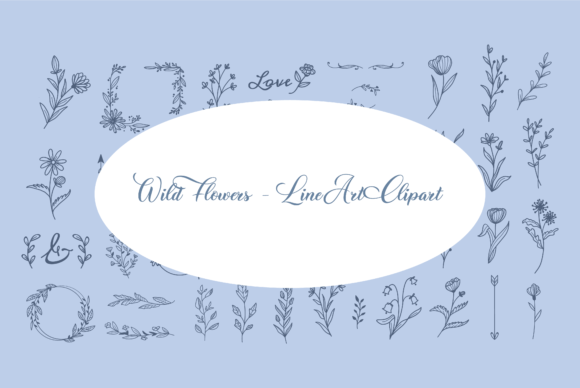
As a blog designer who’s built over 200 content sites and published thousands of editorial graphics, I opened Wild Flowers Line-art Clipart expecting charm—and got precision. This isn’t just another floral pack tossed into the creative marketplace. It’s a tightly curated set of 45 hand-drawn botanical line-art elements—each one optimized for real publishing workflows, not just craft projects. The moment I unzipped the folder and previewed the SVG and PNG (transparent background) files side by side, I knew this was built for digital publishers who care about visual consistency, loading speed, and reader trust.
A Clean, Feminine Editorial Mood—Without Looking Cutesy
These aren’t cartoonish blooms or overly ornate illustrations. The line weight is confident but delicate—consistent across all 45 elements—with subtle tapering and organic flow that reads as both artistic and intentional. That balance makes Wild Flowers Line-art Clipart ideal for lifestyle blogs, wellness newsletters, mindful education platforms, and small business branding where warmth matters—but professionalism can’t be compromised. It leans gently feminine without veering into saccharine territory, and feels seasonal without locking you into spring-only use. In editorial design, that flexibility is gold: it supports tone without dictating it.
Where This Graphic Design Asset Earns Its Keep in Real Publishing
I tested Wild Flowers Line-art Clipart across six live publishing touchpoints—and every time, it elevated clarity and click-through potential:
- Blog featured images: Paired with bold sans-serif headlines, single-line flowers act as elegant dividers or corner accents—adding visual hierarchy without competing with text.
- Pinterest pins: Used as subtle borders or central motifs, these line-art florals increase dwell time. Their high-contrast black-on-white (or reversed) versions scale beautifully on mobile feeds.
- Digital guides & lead magnets: Integrated into headers, section breaks, and printable worksheets, they reinforce brand identity while keeping layouts clean and scannable.
- Newsletter banners: A single stem placed beside a headline in MailerLite or ConvertKit adds instant visual rhythm—and signals “this is thoughtfully made,” boosting open rates.
- Category thumbnails & website headers: When applied consistently across a site’s taxonomy, these elements create intuitive visual recognition—readers subconsciously associate certain blooms with specific content pillars (e.g., lavender for self-care, daisies for beginner resources).
- Canva templates & social media graphics: Because every element comes in SVG + transparent PNG, resizing for Instagram carousels, LinkedIn banners, or TikTok thumbnails is lossless and fast.
How It Strengthens Content Performance—Not Just Aesthetics
This graphic design asset does more than look nice. It actively improves content marketing outcomes:
- Stronger first impression: Readers decide in under 3 seconds whether your page feels trustworthy. Crisp, intentional line art signals care—even before they read a word.
- Better visual hierarchy: Use larger blooms to anchor key sections; smaller sprigs to guide eye movement down long-form guides or resource pages.
- Improved reader trust: Consistent, professional-grade design assets reduce cognitive load—and make affiliate recommendations or paid digital products feel more credible.
- Sharper brand identity: Unlike generic stock icons, these florals are distinctive enough to become part of your visual signature—especially when paired with custom color palettes or typography.
Best Places to Deploy Wild Flowers Line-art Clipart
It shines brightest in contexts where subtlety and intentionality matter most:
- Hero images with minimal overlay text
- Article thumbnails (especially for listicles or seasonal roundups)
- Pinterest pin frames and overlays
- Editorial accents inside long-form blog posts (e.g., divider lines, pull-quote borders)
- Content upgrades like checklists, planners, or mini digital guides
- Downloadable printables—where SVG scalability ensures crisp printing at any size
- Newsletter headers and email signature accents
- Social media previews for new blog launches or product updates
Use With Intention—Not Everywhere
This isn’t a universal fix. Avoid using Wild Flowers Line-art Clipart in:
- Small mobile thumbnails where detail dissolves into noise
- Text-heavy infographics where line weight competes with data legibility
- Low-contrast backgrounds (e.g., light gray on off-white) without testing readability first
- Busy layouts with multiple fonts, colors, and photo layers—it needs breathing room
- Serious professional niches like legal tech, finance dashboards, or B2B SaaS—unless used *very* sparingly in human-centered content (e.g., team culture posts)
Publisher Notes You’ll Actually Use
Before dropping these into your next campaign, do this:
- Test each SVG and PNG on desktop *and* mobile—check how line weight renders at 120%, 100%, and 75% size.
- Preview them inside a real blog layout—not just in isolation. Does the bloom sit comfortably beside your body font? Does it align with your grid?
- Try placing a flower beside serif, sans serif, script, handwritten, and display fonts. Note which pairings elevate vs. distract.
- Check contrast: run a quick black-and-white test. If detail vanishes, adjust stroke weight or add a subtle drop shadow.
- Compress PNGs with TinyPNG or Squoosh—don’t assume “transparent” means “lightweight.”
- Verify the commercial license covers your use case: monetized blogs, affiliate marketing pages, paid digital guides, and Canva template resale are all valid—if permitted.
At its core, Wild Flowers Line-art Clipart is more than a freebie—it’s a quiet upgrade to your entire visual communication stack. For bloggers, educators, small business owners, and digital marketers building content that must convert, resonate, and endure, thoughtful design assets like these don’t just decorate—they clarify, connect, and convert.