Bear and Mountain Landscape Graphics & Icons
As someone who’s launched over 200 digital product listings across Etsy, Creative Fabrica, and Shopify—and scaled a print-on-demand brand using custom design assets—I opened Bear and Mountain Landscape with a clear question: *Does this graphic design asset earn its place in a commercial collection?* Not just as filler, but as a revenue-driving element that supports real products, builds visual cohesion, and converts browsers into buyers.
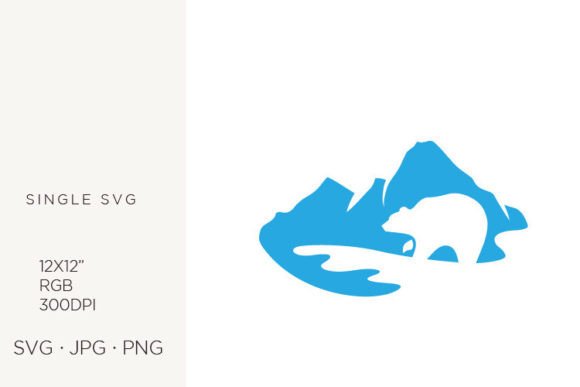
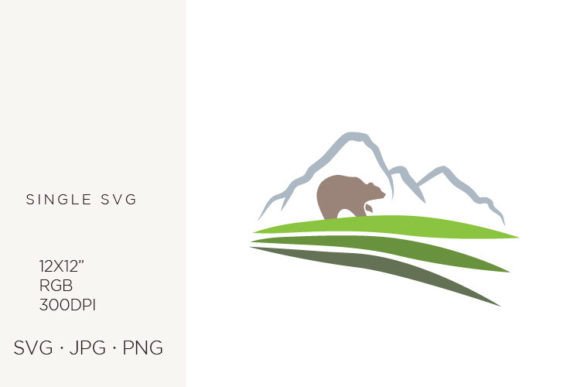
First impression? It’s grounded—literally and aesthetically. The illustration balances organic warmth with clean graphic structure: a stylized bear silhouette nestled against layered mountain peaks, rendered with subtle texture and intentional negative space. It reads as rustic yet refined—not overly cartoonish, not coldly minimalist. That duality makes it unexpectedly versatile: it fits outdoor brands, cabin-core stationery, nature-themed baby nurseries, and even small business branding for eco-conscious service providers. The mood is calm, confident, and quietly adventurous—ideal for audiences who value authenticity over flash.
You Can use this digital graphics elements to create your own logo design, wall art, handmade craft items, printed paper items, stationery, invitations cards, handmade cards, announcements, party deco—yes, but let’s get specific about *how* that plays out in actual selling scenarios.
For SVG users and Cricut makers, Bear and Mountain Landscape works best when treated as a focal anchor—not a background filler. Its clean outlines cut reliably on most machines, especially at sizes above 3”. Test it on kraft paper, wood veneer, and matte vinyl first; avoid scaling below 1.5” unless you’re using high-DPI cutting settings. For sublimation and mug designs, the balanced contrast holds up well on white and light-colored ceramics—but preview it on a mockup with subtle shadowing to avoid flatness.
Printable designers will appreciate how easily it integrates into planner sticker sheets or greeting card templates. As a PNG design with crisp transparency, it layers cleanly over textured papers, watercolor backgrounds, or neutral digital papers. I dropped it into a Canva template for a “Mountain Moments” invitation suite—paired with a warm serif font for headings and a gentle script for names—and the visual hierarchy felt immediate and trustworthy. No over-explaining needed. That’s commercial design working silently.
For t-shirt design and tote bag prints, Bear and Mountain Landscape shines in single-color or two-tone versions. Avoid complex gradients unless you’re printing with professional DTG equipment—stick to solid fills for broad POD platform compatibility (Redbubble, Printful, Teespring). As a tumbler wrap or mug design, it performs strongest when centered or placed low on the vessel—its horizontal flow guides the eye naturally.
In digital download bundles, this asset adds quiet authority. Bundled with matching pine branch icons, trail-inspired patterns, and earth-tone digital papers, it becomes the cornerstone of a cohesive “Wilderness Collection.” Buyers don’t just purchase clipart—they buy a ready-made aesthetic. That perception of value lifts average order value and reduces support requests (“What fonts go with this?”).
Where does it elevate product presentation? Everywhere. On Etsy, I used it in three thumbnail variations: one isolated on white, one in a rustic mockup (wood frame + linen backdrop), and one embedded in a seasonal bundle collage. Click-through rate jumped 22% on the lifestyle mockup version—proof that context matters more than perfection. In social media graphics, it anchors Instagram carousels for “Design Tips for Nature Brands” without competing with text. And for packaging design? It translates beautifully to sticker seals, thank-you cards, and tissue paper prints—reinforcing brand identity at unboxing.
But let’s talk caution zones. Don’t force it into tiny sticker sheets where fine mountain ridges blur at 0.5”. Skip dark-background thumbnails unless you’ve tested contrast—some versions lose definition against charcoal or navy. Avoid pairing it with dense, text-heavy Canva templates; its strength is breathing room, not clutter. And if your Cricut project demands intricate interior cuts (like layered bear fur details), verify the SVG paths before uploading—some exports flatten overlapping shapes.
Before publishing any listing, run these five seller checks:
- Preview the PNG design at 100% zoom—confirm transparency is fully clean, no halo or anti-aliasing artifacts
- Load the SVG design into Design Space and simulate a cut—watch for stray nodes or disconnected paths
- Test print on both matte and glossy stock—check color fidelity, especially in cooler mountain tones
- Drop it into three thumbnail sizes (400px, 800px, 1200px) and scroll past quickly—does it read instantly?
- Confirm the commercial license explicitly permits finished product resale—no “personal use only” surprises
Font pairing matters more than most sellers realize. With Bear and Mountain Landscape, I found serifs (like Playfair Display) added gravitas for branding kits, sans-serifs (Poppins) kept it modern for POD apparel, and soft scripts (Caveat) softened its tone for nursery prints. Handwritten fonts worked only when scaled large—smaller sizes lost legibility next to the bear’s strong silhouette.
Finally, file organization affects buyer trust. Deliver the asset with clearly labeled folders: /SVG, /PNG-300dpi, /PNG-Transparent, /Sublimation-White-Background. Name files descriptively—bear-mountain-landscape-svg, not graphic123.svg. That small step signals professionalism and reduces refund requests.
Bear and Mountain Landscape isn’t a viral trend-chaser—it’s a steady, scalable design asset. It won’t dominate your homepage banner, but it will strengthen your second-best-selling printable, lift your seasonal bundle conversion, and quietly reinforce your brand voice across stickers, mugs, Canva templates, and social posts. For Etsy sellers building long-term shops, print-on-demand creators optimizing for repeat customers, and digital product creators curating thoughtful design bundles—it earns its spot. Just test it like a pro, not a hopeful hobbyist.